
Time-synchronization
| Introduction | This article is written for those interested in latency, especially those using the Wireless Endpoint or across multiple ByteBlower Servers. The quality of the latency measurements strongly depends on having a high-quality time reference. This is especially visible in the one-way latency measurements of ByteBlower server and Wireless Endpoint. Yet this tool provides invaluable information on network under test. With FrameBlasting you receive throughput and latency information for each direction and for each traffic-flow.
Yet measuring such latency values across distributed setups poses a particular challenge. To this end this text explains how to set up a qualitative time synchronization that solves these difficulties. |
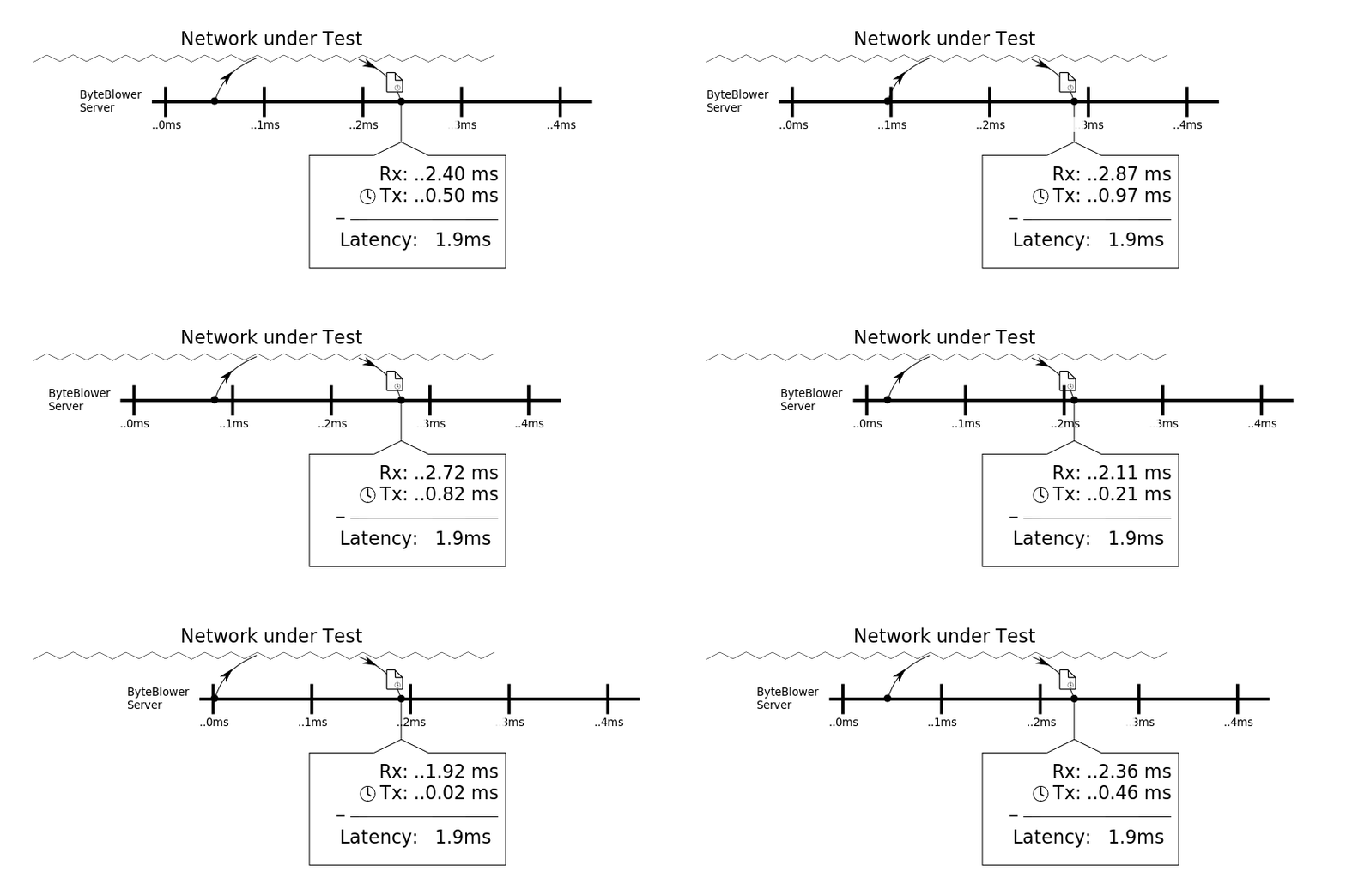
| Why time sync? | Latency of the traffic is the time-interval between transmitting the packet and next receiving somewhere else. Measuring this duration requires a sufficient fine timestamp to of each. In case of a single system, with a single clock, this calculation is straightforward. It is in shown in the picture below. The time-axis at the center represents the clock on the ByteBlower Server. The packet is transmitted at the left side of the figure, it passes through the “Network under Test” and is received further down the time-axis.
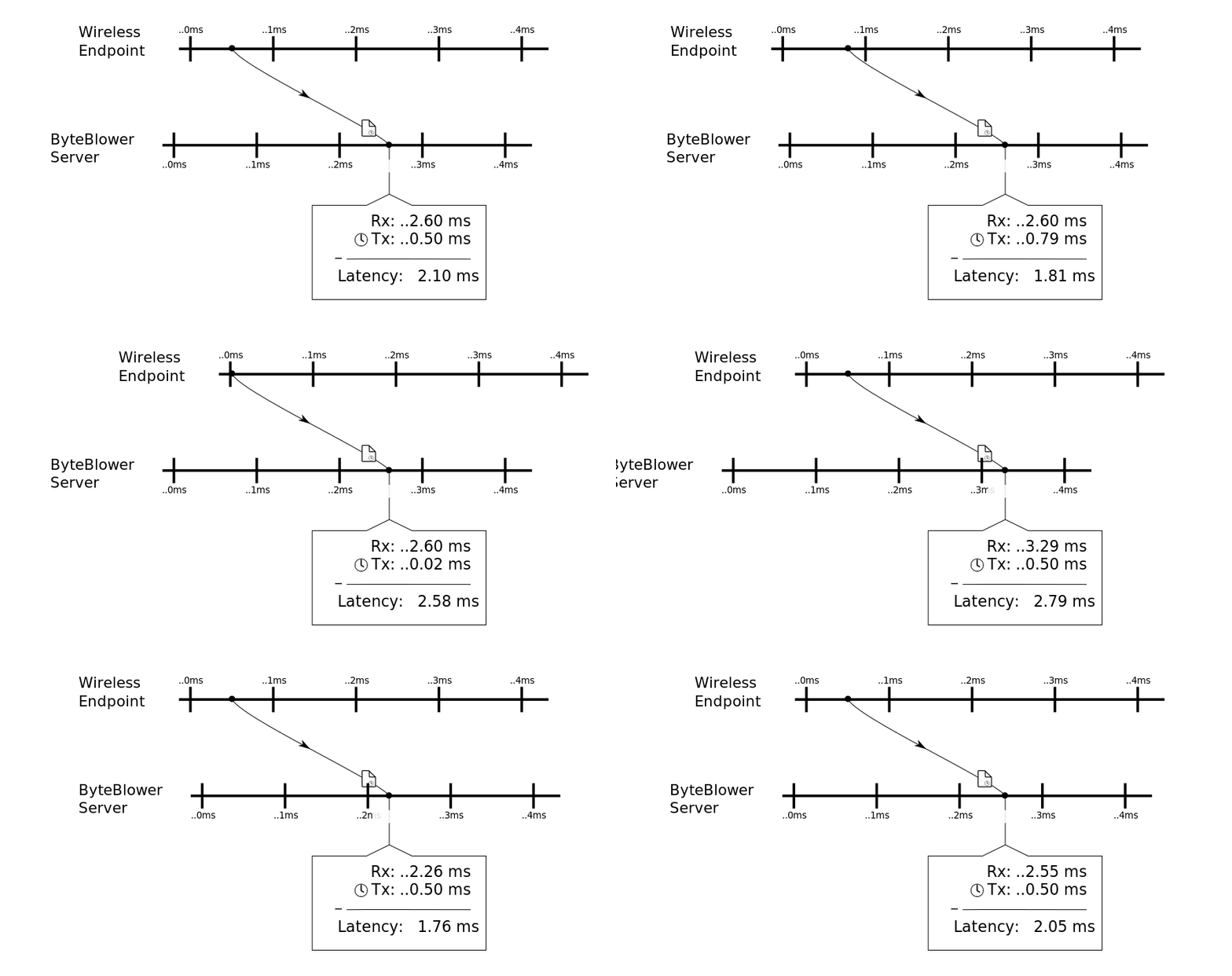
As can be seen above, although this calculation requires precise timestamps, any time-offset is unimportant. Such values are canceled out in the subtraction. This time-offset becomes important in case multiple systems are involved, e.g. a Wireless Endpoint and a ByteBlower Server. This situation is shown in the next situation.
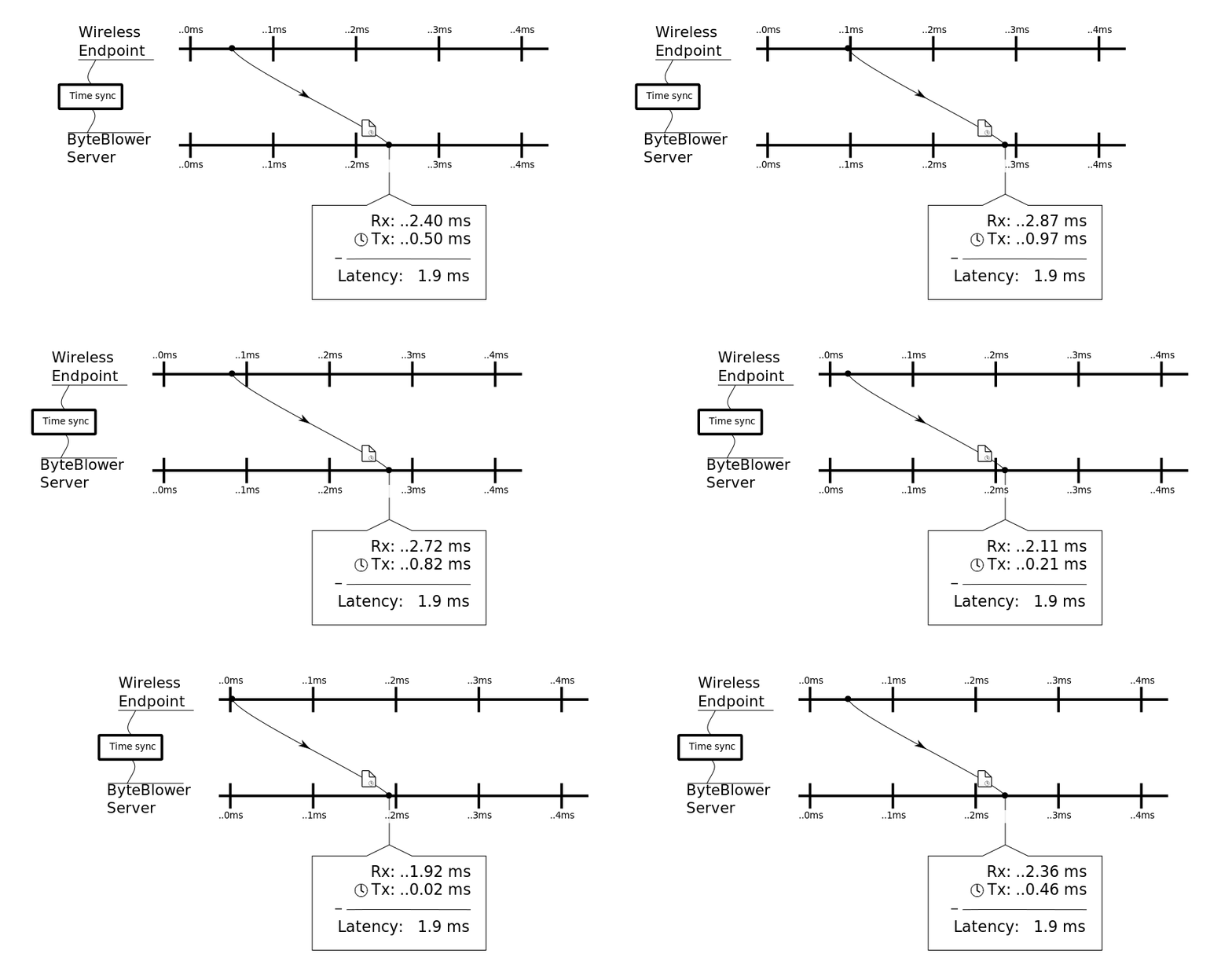
In the above case, the lack of time synchronization between the ByteBlower and Wireless Endpoint causes them to continuously drift compared to each other. These relative time-offsets have a large impact on the latency measurement, in some cases even resulting in negative latency values. This can be improved with time synchronization, its goal is to eliminate the drift between these different systems. In the figure below, a time references keeps both Wireless Endpoint and ByteBlower synchronized to each other. This is sufficient to fix the latency measurement issues.
|
| PTP | PTP, Precision Time Protocol is a time synchronization protocol intended for local networks. In this it complements NTP that offers time synchronization in wider networks, even the internet as whole. Furthermore, as an IEEE standard (IEEE 1588), PTP has considerable hardware support even in commercial-off-the-shelf hardware. These attributes make it the ideal protocol for the time synchronization required for accurate latency measurements.. In the next sections we’ll show how to achieve a time sync with offsets of mere microseconds. PTP is natively supported by the 4100 and 2100 series. It requires dedicated cabling, more information found in the following article. For the other models we recommend falling back to NTP. |